
What is biomass boiler installation?
Biomass boiler installation is the design and fitting of a wood-fuelled heating system from scratch, usually where a home has relied on oil, LPG, electric heaters or an old solid fuel stove until now. The boiler is only one part of the job. The fuel store, the flue route, the buffer tank and the way the new system joins your existing pipework all have to be worked out before anyone orders equipment.
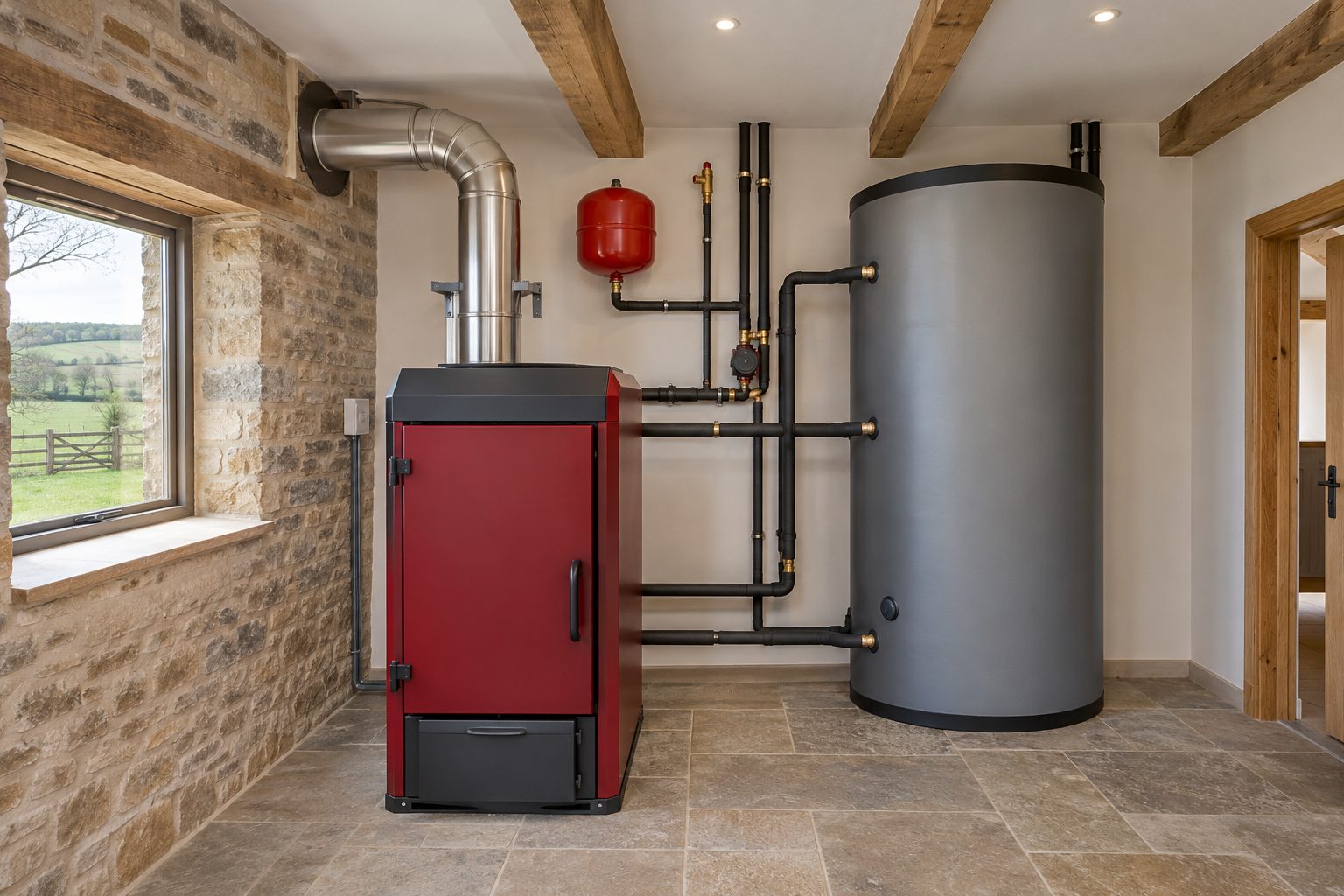
Most people look at installation when an oil boiler is near the end of its life, when they live off the gas grid, or when they want a lower-carbon system on a larger property. A site survey comes first, so a specialist can judge where the boiler room could go, how fuel would arrive and whether the building’s heat demand suits a biomass boiler at all.
Signs you need biomass boiler installation
- Your oil or LPG boiler is old, expensive to run and due for replacement, and you are not connected to mains gas.
- You have an outbuilding, garage or ground-floor room that could become a boiler room and fuel store.
- Your property uses a lot of heat across the year, as large or older homes, farmhouses and small commercial buildings often do.
- You can take fuel deliveries, with a lorry able to reach a store or hopper within the hose or auger distance.
- You want to use a grant, such as the Boiler Upgrade Scheme, and need an installer who can handle the paperwork.
Biomass boiler installation options explained
Installers usually discuss three broad types of boiler. Which one suits you depends on how much heat you need, how much space you have and how much hands-on work you will accept.
Automatic pellet boilers
A pellet boiler draws fuel from a hopper or store through an auger or suction system, so it feeds itself. Automatic feeding reduces manual loading, though you still need to manage fuel deliveries, ash and routine care. The store needs dry, accessible space.
Log gasification boilers
A log boiler is loaded by hand, often once or twice a day in cold weather. It needs a large buffer tank to soak up heat from each burn. Log systems can cost less to buy, but they need storage for seasoned wood and time from the household.
Wood chip boilers
Chip boilers are mostly for farms, estates and larger buildings with their own supply of chip or a nearby supplier. They need a bigger store and a larger plant room than a typical house can offer.
Design the system around heat demand
Ask the installer to explain the heat-loss calculation and proposed boiler output. A buffer tank stores heat from the boiler for later use; its size depends on the chosen design. Include the route for insulated pipes if the boiler will sit in an outbuilding. Agree who makes good walls and floors after the connections are finished.
What to include when asking for a quote
Give an installer the facts that decide the design: the floor area and age of the building, the type of insulation, your current fuel and annual use, and the size of any hot water cylinder. A recent EPC or old fuel bills help them estimate heat demand before the visit, although a proper heat-loss calculation will follow.
Describe the likely boiler room and fuel store in as much detail as you can. Note the distances from the road to the store and from the store to the boiler, any steps or narrow gates, and where a flue could leave the building. Photographs of the room, the existing boiler and the route for a delivery lorry are more useful than a written description.
A written quote names the boiler make and kilowatt output, the buffer tank size, the fuel store or hopper, the flue and liner, the controls and the commissioning. It should say who handles the building regulations notification, whether the installer is registered with HETAS and whether the price assumes a grant. Ask what is left out, such as new radiators, a cylinder or structural work to the store.
How much does biomass boiler installation cost?
| Service | Budget range |
|---|---|
| Biomass Boiler Installation | £10,000–£22,000 |
Our indicative UK range for biomass boiler installation is £10,000–£22,000. The boiler output, fuel store, flue and building work all affect the total. These are editorial budgeting ranges, not supplier offers. Compare the scope with Energy Saving Trust biomass cost guidance and ask for a surveyed price before ordering.
The biomass boiler installation process: what to expect
- A site survey checks the proposed boiler room, flue route, delivery access and the existing heating system.
- The installer carries out a heat-loss calculation and proposes a boiler size, buffer tank and fuel store.
- You receive a written quote and, where relevant, an application is made for a grant before work starts.
- Building work and plumbing begin: the store is prepared, the flue is lined, the boiler and buffer tank are positioned and connected.
- The system is filled, flushed, commissioned and tested, and the controls are set to suit your household.
- You receive a handover covering fuel, ash removal, servicing and what the installer will notify to the authorities.
The Boiler Upgrade Scheme eligibility rules cover eligible rural properties off the gas grid in England and Wales, with further conditions on the property and equipment. An existing biomass system does not qualify for a like-for-like replacement under this scheme. Check eligibility with an MCS-certified installer before budgeting for support.
Approvals and specialist checks
For installation or replacement, agree how the work will meet the rules where your property is located. In England and Wales, an installer registered for the relevant work with a competent person scheme can self-certify; building control is another route. HETAS guidance on Building Regulations explains this distinction. Scotland and Northern Ireland have separate approval arrangements. Ask about your boiler make as well as registration.
Check proposed flue or outbuilding changes with the local council before work starts, particularly for listed buildings. The smoke control area rules also affect the fuel and appliance you can use.
How to choose a biomass boiler installation specialist
Ask these questions while the specialist is looking at your system.
- Are you registered with HETAS, and can I see my installer’s current registration?
- Will you complete a heat-loss calculation rather than sizing the boiler by rule of thumb?
- Who handles the Building Regulations notification and the grant application, if I qualify for one?
- Which boiler brands do you install, and who services them if you stop trading?
- What does the guarantee cover, and is the first service included?
Frequently asked questions
How much does biomass boiler installation cost?
Our UK guide is £10,000–£22,000 depending on the boiler type, the fuel store, the flue and the property. A site survey is the only way to get a firm price, and grants can reduce the amount you pay.
Do I need a lot of space for a biomass boiler?
More than for a gas boiler. Allow for the boiler, a dry fuel store and any buffer tank the design requires, plus clear access for deliveries. Some homes use an outbuilding or a purpose-built store to avoid giving up a room.
Can I get a grant for a new biomass boiler?
Some rural, off-gas-grid properties in England and Wales may qualify under the Boiler Upgrade Scheme. There are further property and equipment conditions, so check the linked eligibility rules before relying on a grant.
How long does a biomass installation take?
Allow about 3–10 days on site once the equipment is ordered. Building work to the store and flue, and the lead time for the boiler, can add weeks to the whole project.
Related biomass work
If the survey identifies other work, compare the scope of biomass boiler replacement and biomass boiler servicing before booking.
Request a price for your biomass boiler
Use our free biomass boiler enquiry form to describe the work. Up to four independent businesses may respond, depending on coverage and availability. Getbiomass.co.uk introduces enquiries; it does not carry out the work or employ the engineers, and you agree the price and contract directly with the business you choose.
If a carbon monoxide alarm sounds, leave the building and seek urgent advice. Do not wait for quotation replies or restart the appliance before a competent professional checks it. Follow the HSE advice on suspected carbon monoxide exposure.